Fed Highlights “High Prices” in Equities: Are We Facing a Bubble?

Redacción Mapfre

The U.S. Federal Reserve has dominated much of the economic and financial discussion in recent weeks, largely due to the debate over possible rate cuts, which were confirmed last week. On Tuesday, Chair Jerome Powell again drew attention by referring in a speech to the “fairly high” prices in U.S. equities. With Wall Street at historic highs, the question arises whether we are dealing with an equity bubble.
La Financière Responsable GM Alberto Matellán downplays that scenario. “There are many indicators showing prices are elevated, although I wouldn’t say it's a bubble,” the economist notes. According to Matellán, Powell’s remarks, framed within the debate on rates, point more to the risk of markets continuing to rise solely due to monetary easing, without support from fundamentals, a situation he considers “more concerning.” So, while current levels do not imply a bubble, they do add another reason not to push rates lower.
The Fed faces the challenge of balancing inflation, still above target, with employment expectations that are beginning to show signs of slowdown, something Matellán describes as “difficult.” In his view, inflation risk remains greater, which makes the recent cut “reasonable” in light of the change in employment data, though he sees no justification for going further.
In Europe, recently released macroeconomic data from Germany were mixed: on one hand, an unexpected drop in the Business Climate Index; on the other, a rebound in the composite PMI, driven mainly by services. Matellán plays down the former, which, despite being the first decline in months, represents only a minor fluctuation he attributes to the “normal noise in variables.”
On the PMI, which reflects the strength of the private sector, he believes it could sustain Germany’s moderately positive growth, which continues to surprise on the upside. Still, he warns that when macro indicators begin sending contradictory signals, alternating between positive and negative data, it often anticipates a cycle change. Even so, he considers this reading “premature” in Germany’s case.
Factors likely to drive equities
Asked about the variables most decisive for market performance, Matellán points to three:
- Interest rates: Although investor focus shifts cyclically, he expects central bank policy decisions to remain the main driver of equity movements in the coming months.
- Macroeconomic expectations: A factor that usually gains weight toward year-end. Investors will be watching growth projections for 2026, expected to be lower than this year’s, although the worst-case scenarios once feared after Trump’s trade offensives have not played out.
- Liquidity: “Currently supportive, although it could turn quickly,” says the MAPFRE executive.
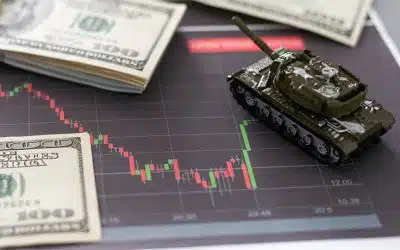
Defense stocks have gained appeal in the current geopolitical environment, though Matellán considers this largely cyclical. He argues for a long-term investment approach focused on companies with a consistent record of solid earnings. Although these stocks are sensitive to current events, “they will remain solid with or without geopolitics,” he says.
For Matellán, investing in defense is not a simple yes-or-no decision and depends on specific companies. He also sees interesting opportunities in firms that, while not traditional manufacturers, are connected to the sector through advanced technologies that are increasingly finding military applications.