"The impact of the new Trump era on the markets will be short lived"

Redacción Mapfre

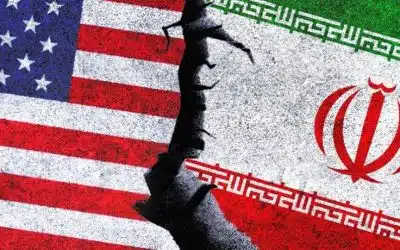
The trade disputes triggered by Trump’s initial actions, particularly his tariff threats, are putting pressure on the market. However, Alberto Matellán, General Manager of La Financière Responsable (LFR), MAPFRE’s asset management subsidiary in France, argues that the impact will be temporary and the market will stabilize within a new international economic framework.
“I believe this is a short-term impact. What we’re witnessing is a different, more aggressive style of politics, but ultimately, that’s all it is,” the economist said in his interview on Radio Intereconomía this Wednesday. The consequences will not be felt until these directives from the new U.S. president take effect, and “we’re seeing that in many cases, they end up in negotiations.”
“While this generates a lot of noise and creates short-term tension, I don’t believe that the volatility or the tension will be permanent,” but the situation “will stabilize in a new scenario,” said Matellán.
Like neighbors Mexico and Canada, as well as China, Europe appears to be one of Donald Trump’s next targets. But Matellán advises waiting to see the details, as the impact of tariffs will vary depending on which products are affected and to what extent. He also pointed out that these measures would harm the U.S. economy, meaning the tariffs may ultimately be lower than those announced in other instances.
The Aftermath of DeepSeek
This week, all eyes remained on the market downturns triggered by the launch of the new Chinese AI, DeepSeek. Matellán, however, views this movement as part of a “typical pattern” that occurs when a new technology emerges—starting with sharp gains, followed by a “clear peak,” which was reached just last week. This is typically followed by “some disappointment,” as recently observed, and a subsequent “collapse” on the stock market. From there, “the market gets refined, and only the truly viable technologies remain,” Matellán explained.
This situation is reminiscent of the dot-com bubble in the early 2000s, now further amplified by investment vehicles like ETFs and index funds, which intensify market trends. That’s why Matellán underscored the importance of active management, “to critically evaluate which companies are best positioned for long-term success.”
Positive PMIs and tailwinds for banks
In Spain, the economic spotlight has also been on the banking sector’s earnings reports, with Santander posting a historic record in profits. Alberto Matellán believes the sector may continue performing well for two reasons: first, the rising interest rate curves, which support their business; and second, improved growth expectations, stronger in the U.S. but also present in Europe, which enhance the banking sector’s profit margins by lowering default rates.
In this context, the latest PMI indices for the Eurozone have been released, showing positive results after several weeks in the red. The CEO of LFR described this data as “hopeful,” especially in the midst of ongoing uncertainty. However, when examining the details, the figures related to cost evolution signal a potential negative impact on inflation.