Inflation and war hit household consumer spending

Redacción Mapfre

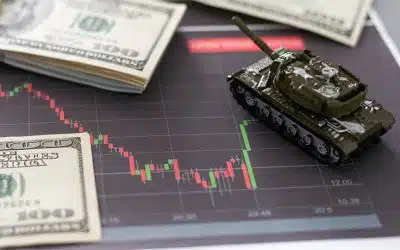
Stock markets continue to recover from the early weeks of conflict. In fact, the vast majority of indices have returned to pre-conflict levels. While this may appear to be encouraging news, analysts are concerned that the war situation may eventually be normalized by central banks and markets. However, any news in this regard could alter the situation of the selective markets overnight, showing that we are still facing a context of uncertainty where noise is driving market movements.
This, logically, is being passed on to many sectors, which is putting a spoke in the wheel of the economic recovery expected for this year. In one of its forecasts, the Fitch rating agency lowered its forecast of Spanish GDP growth to 5% (compared to the previous 6.3%), which Alberto Matellán, chief economist at MAPFRE Inversión, sees as “right” to a certain extent. “The scenario has changed, there are many more risks for the economy than a few months ago and they can affect market expectations and, moreover, the real economy," says the expert in an interview on Radio Intereconomía.
The proof that the impact of the latest news is being felt not only in the forecasts but also in the very functioning of the economy is very present in oil, which “many companies depend on”: “Volatility and price influence business decisions in both the medium and long term.”
As a result, household consumption is also coming under pressure. At present, there are many sources of uncertainty for the end consumer (inflation, war, rates and mortgages, among others) that are weighing heavily on their decisions. This situation is even worse when “there are supply problems” not only in Spain, but throughout Europe. However, Alberto Matellán admits that Spain is facing a more difficult situation due to “energy costs, which have risen very fast (i); a higher unemployment rate (ii); food prices that are already being passed on to SMEs (iii); and high transportation costs that are affecting this type of goods (iv)".
All in all, he acknowledges that “we are headed for lower growth across the continent.” Even so, there may be opportunities in the market for the individual investor. Beyond the exogenous factors that may condition the composition of portfolios, the economist stresses that “they must have a profile that reflects their vital objectives”.