Liberation Day tariffs and Trump's pause: USA spurs global trade upheaval

Redacción Mapfre

MAPFRE Economics' analysis team
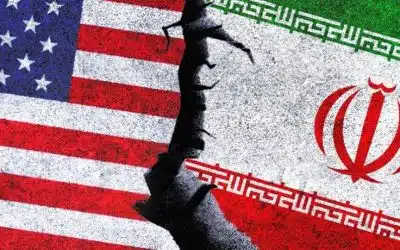
April 2, 2025 will be marked as the beginning of a new geo-economic era. On that day, the United States imposed a universal 10% tariff on all imports under the name “Liberation Day”. Although, for the moment, Donald Trump has announced that they are on hold, this is a historic decision that not only redefines the trade policy of the world's largest economy, but also puts in check the multilateral order on which global trade has been sustained for decades.
Under the initial proposal, additional tariffs of up to 49% would be imposed on products from countries considered “non-reciprocal”, including China and, to a lesser extent, the European Union. This tariff offensive, now paused for all countries except the Asian giant, is ideologically driven by the so-called Miran Doctrine. It represents a break with the traditional principles of free trade and a firm commitment to industrial sovereignty, economic pressure as a foreign policy tool and a radical reconfiguration of global value chains.
What is behind this change?
Far from being a simple increase in tariffs, this movement is due to a structured economic power doctrine. Inspired by Stephen Miran, former US Treasury adviser, the strategy seeks to correct imbalances caused by a structurally strong dollar, curb unfair trade practices, and reindustrialize the country through barriers to entry, rather than subsidies.
In addition, the so-called “Mar-a-Lago Agreement,” a type of re-reading of the 1985 Plaza Accord, anticipates a broader diplomatic offensive to devalue the dollar, renegotiate external debt, and force monetary adjustments in third countries. In this new framework, trade ceases to be an end in itself and becomes a geopolitical lever.
Global impact: inflation, uncertainty, and retaliation
The announcement has shaken the markets. Stock markets in the red, rising bonds, a falling dollar and a 7% plunge in the price of oil reflect a clear sentiment: uncertainty is here to stay. Although the announcement of the pause triggered a rebound, the experts at MAPFRE Economics advise caution.
At the macroeconomic level, if the worst-case scenarios continue, the outlook is worrying:
- A 15% contraction in US imports in two or three years.
- A fall in global GDP of up to 1 percentage point in 2026.
- Inflationary rebounds due to higher import prices.
- A reduction in consumption, investment, and global trade.
In this context, central banks would face a dilemma: keep rates high to control inflation or relax them to avoid a recession. Monetary policy enters a minefield.
Europe and the rest of the world: between caution and retaliation
While some countries such as Australia and the United Kingdom opted for a neutral stance, others were already preparing their responses. China targeted key sectors such as soybeans and technology, Mexico responded with tariffs on energy and food, and the European Union threatened to activate its Anti-Coercion Instrument, which allows legal and proportionate countermeasures without violating WTO rules.
The key question is: are we facing a new trade war or an inevitable readjustment of the global order? The precedent of the 1930 Smoot-Hawley Tariff Act, which worsened the Great Depression, serves as a warning. History doesn’t repeat itself, but it does rhyme.
A fragmented world in construction
This policy is not simply a short-term measure. It is a structural change. The United States is not just protecting its industry: it is redefining the rules of the global game. And it does so at a time of growing selective deglobalization, geopolitical tensions, and weakening of multilateral organizations.
The result? A more uncertain, more fragmented environment with greater systemic risk. Free trade enters the controlled disintegration phase and the cost can be high: sustained inflation, falling investment, and prolonged diplomatic tensions.
Conclusion: a new global dashboard
The era of Liberation Day Tariffs it is not just a turn in US economic policy. It is a declaration of intent: The United States prioritizes national security and industrial sovereignty over unrestricted trade. The problem is that, in this new game, the rules are not yet clear... and all players are recalculating their strategy.