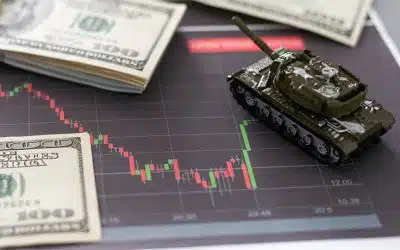
The markets keep an eye on diplomatic crisis

Redacción Mapfre

The Fed put refers to the Federal Reserve taking action to support the market in times of rising risks and volatility. And one of the biggest risks at present is undoubtedly the geopolitical issue of Ukraine, an event not anticipated by the stock markets and which has frightened investors and analysts. Even so, and after the 2% rebound that has given the market some breathing room, the collapse in the indexes since the beginning of the year does not, however, seem to indicate that things have changed. “We aren’t surprised,” says Ismael García Puente, investment manager and fund selector at MGP, who believes that the market is already pricing in “not only the shift in monetary policy, but also the latest macroeconomic data.”
For his part, Alberto Matellán, chief economist at MAPFRE Inversión, contends that the worst-case scenario for the Ukrainian conflict has not yet been discounted, “but the most probable oneshave been”. However, experts are not quite ready to quantify the effect on the markets of the diplomatic crisis in Ukraine, nor do they know how long the tension in Eastern Europe will last. One of the most direct consequences, which is already being felt, relates to the energy sector, which, together with China’s expansive policy that “is causing an increase in the demand for raw materials,” continues to provide arguments for the price of oil to continue rising over the coming weeks.
Geopolitical tensions could also have an impact on inflation. Alberto, however, believes that “economic dynamics alone would cause the price level to ease”. Against this backdrop, and with rumors of a more aggressive tone from central banks, the economist does not expect much news beyond what is already the expected. Nevertheless, both experts point out that the upcoming meetings will be focused on the balance sheet and a possible liquidity review.
The diplomatic crisis has come at a hard time for the technology sector. In view of the broad stock losses, Ismael acknowledges that “there is a lot of dispersion among companies” and that it is necessary to go “case by case.” “Indexes can conceal many individual stories and we have seen many with the earnings reports,” adds the manager, further supported by Alberto, who argues that the big tech as a whole, which is viewed as cyclical, “is performing worse than defensive stocks because of the fear of rising interest rates.” Therefore, and “with a few months of swings and uncertainty ahead,” they recommend watching the market “with your homework done” and waiting for good opportunities.