Trade as a tool, not as an end in itself

Redacción Mapfre

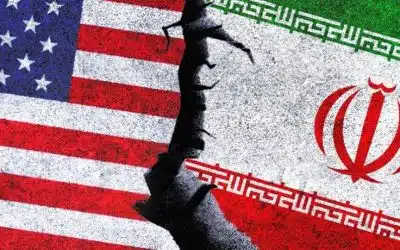
Global trade policy is undergoing a transition phase dominated—primarily in the United States and Europe—by an increasing tendency toward national assertiveness. While discussion on the benefits of free trade is ongoing, this debate is often accompanied by references to the need to ensure that trade is fair and offers clear benefits — particularly with regard to the return of job positions in the manufacturing industry in developed countries. Amid this re-examining of international trade, there are also growing tensions between the US, Europe and China.
With international trade becoming a hot topic, the developments mentioned above are strongly reflected in the EU Trade Policy Review (TPR). One only needs to refer to the heading of its first section to get an idea of the importance that the TPR attaches to the role of trade in times of economic transformation: "European trade policy at a time of economic transformation and geopolitical instability."
In terms of relevance, this document should be considered on a par with other political priorities, such as the Green Deal, the CBAM (Carbon Border Adjustment Mechanism) and the Industrial Strategy. The TPR brings to the fore just how instrumental trade is to growth and well-being, stating that the EU's review of trade policy aims to respond to national economic priorities and the changing global geopolitical landscape.
Broadly, the TPR points to the EU's transversal priorities of strengthening national economies, ensuring fair trade through regulation and compliance with trade agreements, addressing climate change, and reviving the WTO.
In line with the above, it is important to realize that the strategy sends a clear message: that the EU no longer sees free trade agreements as an end in themselves, but rather as one more tool—along with others such as the CBAM and the International Procurement Instrument—that serves to protect the domestic economy and increase the EU's global influence in the areas of climate change, human rights and working regulations.
Therefore, the EU's national and international priorities are intertwined: By simultaneously imposing new regulations for domestic producers and protecting them in equal measure, the EU hopes to force international trading partners to apply similar regulatory rules.
In addition to using new political tools, the European Commission will also prioritize efforts to improve the implementation of existing trade agreements and to use such agreements to improve international regulatory standards. The main challenge for the Commission in making these ideas a reality will be to establish a consensus on how to enforce regulations globally without undermining trade.
In my opinion, and to conclude, this will have three main effects. Firstly, the EU's increasingly protectionist trade agenda runs the risk of creating political tensions with its trading partners. Secondly, increased cooperation between the EU and the US on trade, among other areas, would weaken the prospect of closer relations between the EU and China. Lastly, faced with an aging population, old industries falling by the wayside and the EU moving further toward digitization, Europe could become increasingly dependent on foreign innovation.
Gonzalo de Cadenas-Santiago.
Director of macroeconomics and financial analysis at MAPFRE Economics.